Inventories (2): Cost Flow Assumptions
When prices and quantities change every single time you buy, you need a cost flow assumption — here's the rundown on FIFO, LIFO, weighted average, and perpetual vs. periodic.
Let me dive right in.
So inventory piles up in a company,
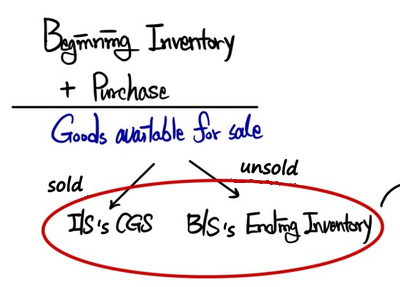
and we already get how this stuff gets booked in monetary terms.
But here’s the thing — buying inventory and selling inventory? That’s not a once-a-year event.
We buy in January, we buy again in April, we buy again in September. We sell in January, sell in February, sell in May. And on top of all that, the unit price we paid each time? Probably different every single time.
So naturally, the unit price we sold at would also be different every time, right????
Lol lol lol lol lol lol.
Even a tiny corner store in the neighborhood would have a hell of a time closing the books on this….
P (price) is different every time. Q (quantity) is different every time….
And then — for the items that just sold this period, what did we pay for those specifically? And the ones still sitting unsold, what did we pay for those? And so on….
In the end,

we just have to make a reasonable assumption!!!!
For methodologies that make that “reasonable assumption” — we split them up:
For P: FIFO, Avg, LIFO, and specific identification. For Q: Perpetual and Periodic.
One by one:
- FIFO (First-In First-Out): assume the oldest inventory got sold off first, in order.
- Avg (weighted average cost): take a weighted average using the quantities you bought at each unit price.
- LIFO (Last-In First-Out): assume the most recent inventory is what got sold ☜ Not allowed under IFRS! This whole concept exists because US-GAAP allows it.
- Perpetual inventory system: calculate COGS (cost of goods sold) for what got consumed this period, then back into Ending Inventory from there.
- Periodic inventory system: count what’s actually left at period-end (Ending Inventory), then back-calculate COGS from that.
(For Q… honestly don’t overthink it… it’s like buying 100 ice creams, then either counting how many you ate (COGS) to figure out how many are left, OR counting how many are left (Ending Inv) to figure out how many you ate — those should obviously give the same answer, right?
But in real life they actually don’t always match, because, you know, a thief might’ve grabbed some, or a fire took some out, and apparently it’s just hard to get them to line up. So in practice, Periodic is the main method and Perpetual is used to back it up. The takeaway: in practice people care most about accurately counting what’s left.)
I skipped specific identification on purpose. Apparently shipbuilding and construction companies use it — industries where you can literally track each piece of inventory one by one. It’s not a common method, and conceptually there’s nothing tricky about it — you just don’t lose track of any single item. Ever.
Honestly I think it’s fine to just know “this exists” and skip the details!!!
Rather than walking through all of the above with words,
let’s just smash through a tiny example. Way easier to absorb that way.
So — one super simple example!
I think just attaching my notes as-is will be way more readable here.
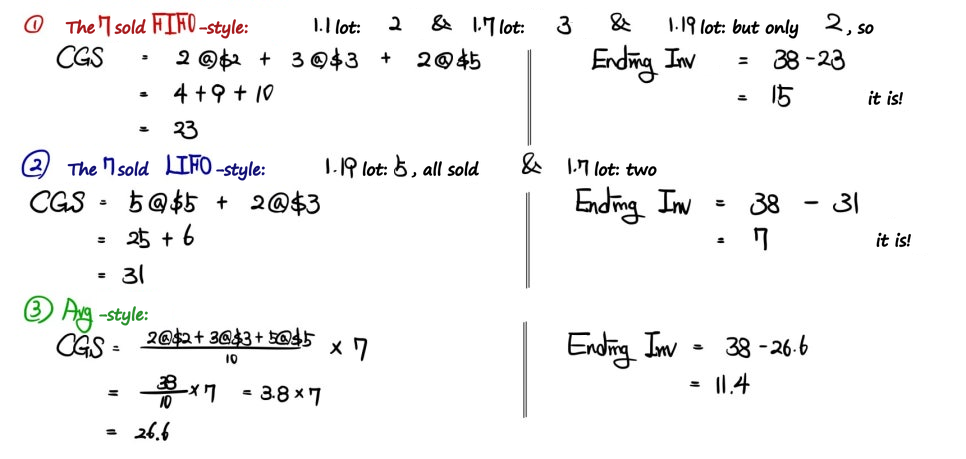
Ah whatever, all the related examples from this point on, every single one of them~~~
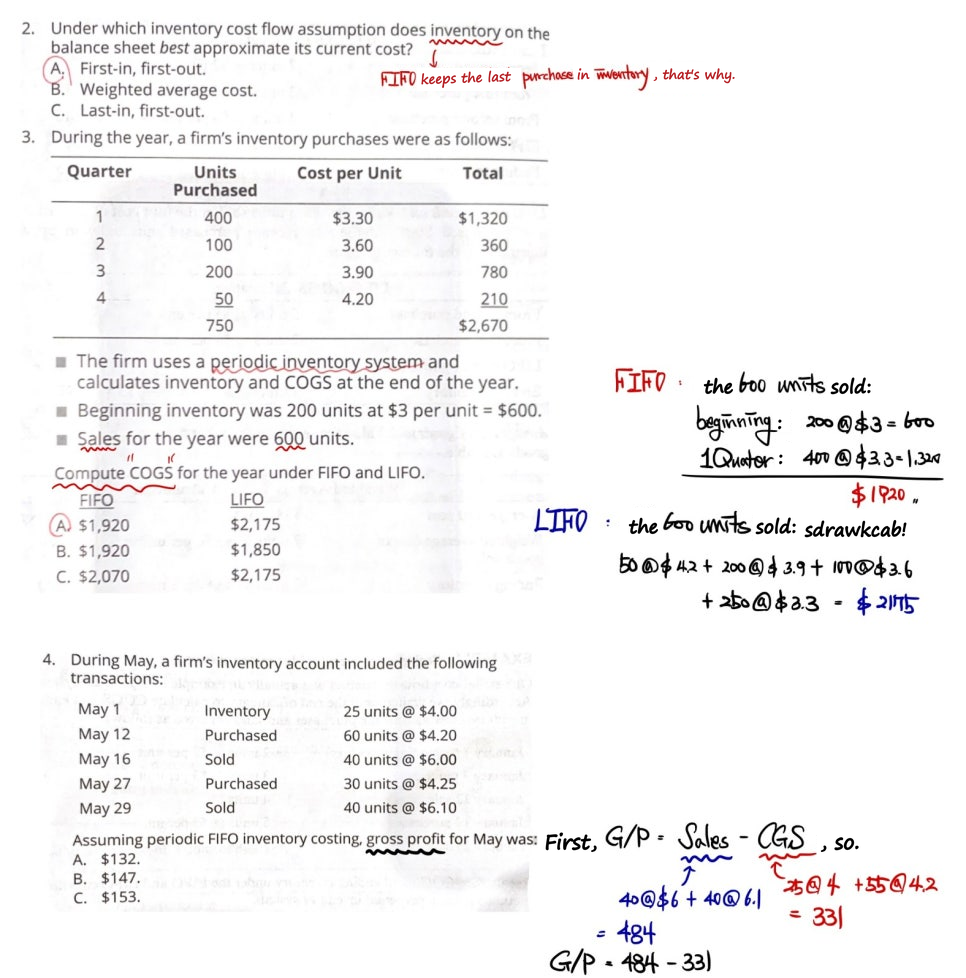
There are also worked examples for Perpetual and Periodic,
and this one too……..
I think not re-typing it out makes it more readable, so I’ll just upload it as a photo!!!!!!!!!!!!!!!!!!!!!!!!!!!
(Absolutely NOT because I’m being lazy!!!!!!!!!!!!!!!!!…. Please believe me………. lol)
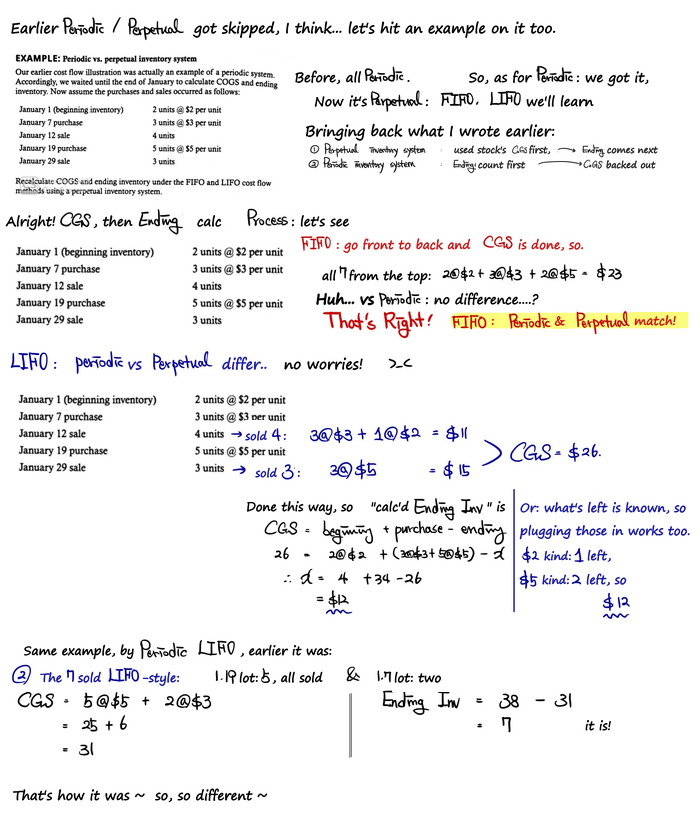
The bottom line: with FIFO, the numbers come out the same whether you use Perpetual or Periodic. But with LIFO, the numbers depend on which system you pick……
That’s basically the punchline of the notes above.
One more bit of terminology before we move on:
- Avg + Periodic → called weighted average
- Avg + Perpetual → called moving average
Honestly this isn’t really a tested point on the CFA…. so just know the names exist and move on.
OK so what we’re going to do now —
with one single example,
work through all possible combinations of (FIFO, LIFO) × (Perpetual, Periodic)!
Doing it that way really helps it click, right?!
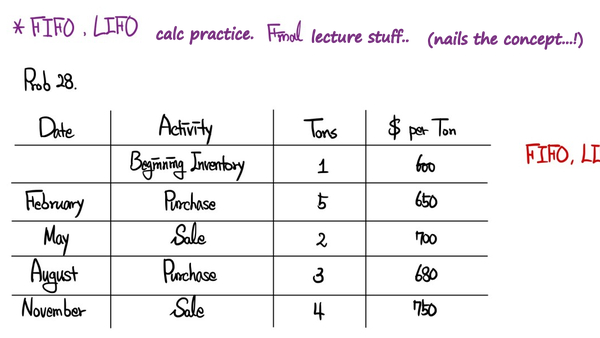
Let’s go!!!!!!!!!!
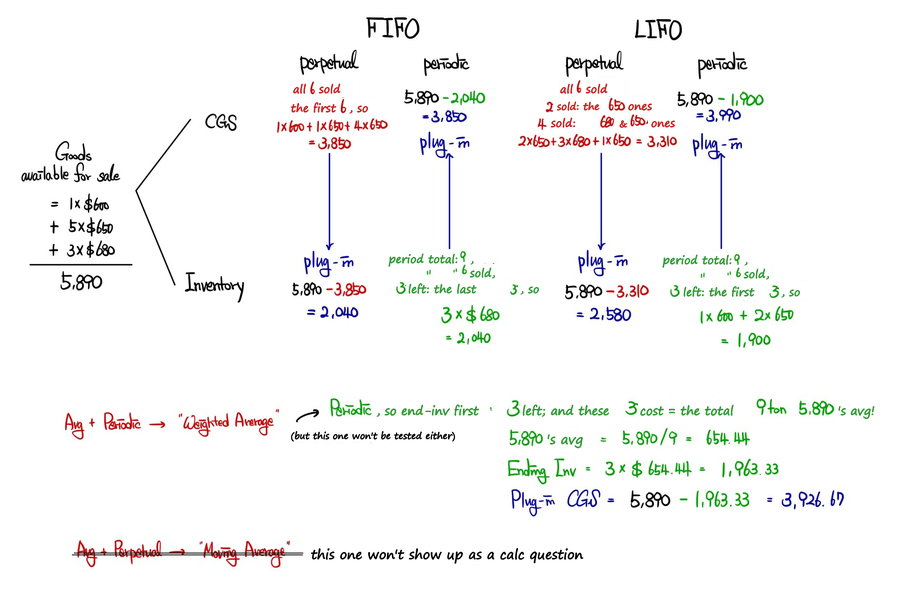
OK OK OK OK OK OK OK OK OK OK ok ok ok ok ok ok ok ok ok ok ok ok ok ok ok ok ok ok ok ok ok ok ok.
Now let’s chat about a slightly different topic before we wrap this post :-)
We are not studying for the CPA here.
If this were the CPA, we wouldn’t be lumping everything together and waving our hands so casually about what gets buried into inventory.
What counts as “acquisition,” what goes into acquisition cost….
Stuff like sales discounts, purchase discounts, all the foundational stuff,
how value-added tax has to be deducted, and when something is bought on credit and you’ve agreed to pay over n years, how you handle that with the effective interest rate method, and so on.
Yeahhh. That’s right.
I just learned all this recently from Professor Kim Jae-ho’s intermediate accounting lectures…. and the accounting in intermediate accounting is on a whole other level lol lol lol lol
Anyway, this post is CFA studying.
And given that “CFA” translates to “Financial Analyst,” our job is to look at F/S (financial statements) — written carefully and by-the-book by CPAs (Certified Public Accountants) putting their professional honor on the line — and do Financial Analysis reaaaaaaaally well.
(Yes yes yes yes…. right. Financial statements aren’t actually written by accountants, you know. They’re written by management (which in practice means working-level staff write them and management takes responsibility), and the job of auditing those financial statements is something the government has restricted to people with a license — which is why it’s not just an “accountant” but a Certified Public Accountant. That’s what the “certified” part means heh. Same idea as a certified real estate broker.)
(Anyway, point being, F/S is reaaally carefully written.)
(Meanwhile, the CFA — well, there isn’t really any monopoly business (?) that only a CFA holder can legally do, so the “certified” thing is kinda… ha….)
So in the F/S, at least for now, from the inventory angle,
FIFO or LIFO — either one is fair game,
and depending on which one a company picks, certain characteristic patterns naturally show up in the F/S, right?!
Let’s look at those!!!!!!
Inflation / deflation
(Quick aside as general knowledge: disinflation means a decline in the rate of inflation — so prices are still going up, just more slowly. Deflation is when prices are actually falling — so the rate of price change is negative.)
Depending on whether we’re in inflation or deflation, FIFO and LIFO give you different patterns.
If we draw out the inventory we’re stocking up over time as a diagram,
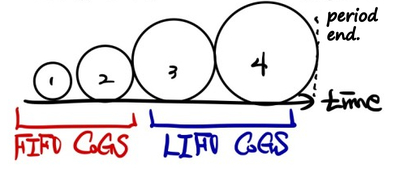
it looks like this — circle sizes representing prices. If we use FIFO, we’re saying the inventory we bought earlier is the stuff that sold.
(Assuming not all inventory got sold,) we’re saying the cheaper stuff bought way back is what got sold, so cost of goods sold is recorded as smaller compared to LIFO.
Flip side — for a LIFO company, the cheap stuff bought way back is just sitting there, and we’re saying the most recent (more expensive) stuff sold first. So COGS comes out bigger.
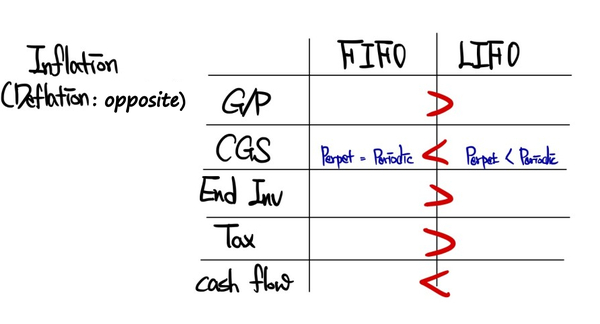
Thinking about FIFO (against LIFO):
- COGS recorded smaller → G/P (Gross Profit = Sales − COGS) recorded bigger,
- And since less inventory value is flowing out, Ending Inventory is recorded bigger too.
FIFO records costs as smaller, which ultimately means profits are recorded bigger.
Corporate tax is a tax on corporate income — proportional to how big earnings are. Bigger profit = bigger tax bill.
One more thing.
The company paying more Tax — purely from a cash standpoint — is paying out more cash for taxes, so cash flow comes out smaller.
Long-winded, I know — but if we cram all of this into one diagram, it looks like this:
This isn’t a “which one is better” discussion.
But somebody actually running a company will think about all this and decide whether to go FIFO or LIFO.
(In Korea, of course, as long as corporate accounting standards are IFRS, LIFO is off the table. And since this is an American exam… and LIFO is allowed in the US…. that’s why this whole discussion even exists…. ah, and also the SEC (Korea’s equivalent is the FSS — the FSS handles work delegated by the FSC. The very top national-level body for finance stuff in Korea is the FSC!))
(Anyway, the SEC used to not endorse IFRS, but around 2010, or maybe 2008, they shifted to endorsing IFRS, apparently.)
An inflationary environment is just… the normal state of things. Korea, the US, wherever — the monetary authority sets a target inflation rate (3–5%),
and the goal is to keep inflation stably bouncing around inside that range.
If you actually walk into the Bank of Korea — our monetary authority — the very first thing you see is “price stability.” And “price stability” does NOT mean 0% inflation!!!!!!!!!!!! Anyway,
So in a normal world where prices rise stably, for example —
if the CEO is a hired professional manager, they’re gonna prefer FIFO.
Because FIFO might look worse on cash flow, but in terms of Net Income (the period’s net profit) it looks bigger than LIFO.
Whereas an owner-CEO — they care more about not paying tax, so they’d lean LIFO???
(Obviously you can layer on more nuance if you want, but roughly that’s the shape of it.)
One more thing worth mentioning.
So IFRS doesn’t recognize LIFO. But before IFRS rolled in, Korea’s original accounting standard was called K-GAAP, which was largely modeled on US-GAAP,
and K-GAAP did recognize LIFO, apparently.
But while a lot of companies hadn’t actually been using LIFO in practice, oil refiners in particular had been using it, they say.
Then in 2008, suddenly they’re told to apply IFRS — and when you apply FIFO here,
the oil that was bought crazy cheap a long time ago is the stuff getting recorded as sold, with a tiny COGS hitting the I/S,
and profits BALLOON dramatically!!!!
(This phenomenon — profits suddenly surging — is called LIFO Liquidation, which we’ll cover later!)
Bro, seriously?!!!!!
We’re just sitting here minding our business and now you’re telling us to pay an insane amount in taxes?!!!!!!!!!!!!!!!!!!!!!!!!!!!
— the oil refiners protested hard over this,
and the government ended up giving them the option to pay it in installments over 3 years, apparently.
So now, are the oil refiners using FIFO??????????
Nope nope.
They all just use Weighted Average Cost, apparently. heh heh heh heh
OK so anyway,
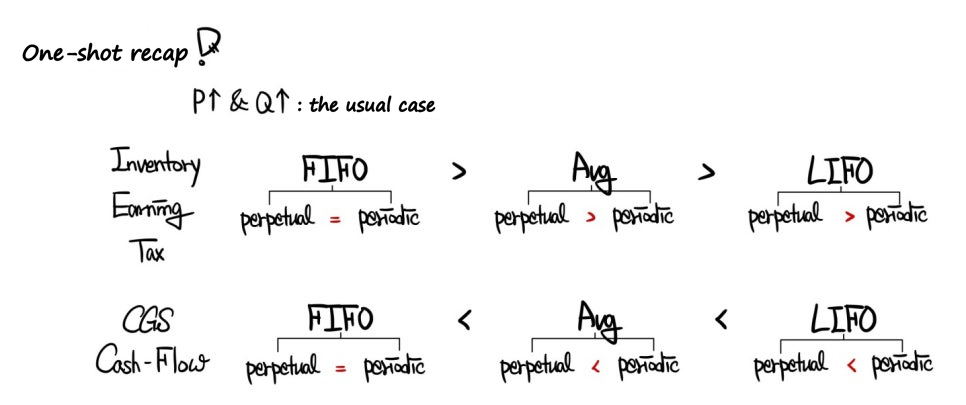
let me drop a one-shot summary diagram of FIFO vs LIFO and all that,
and call it a wrap on this post!
I’d love for the next post to be about tangible assets (property, plant and equipment),
but there’s still a bit more to cover on inventory,
so see you in another inventory post! heh heh heh heh heh
PS.
Not important for CFA purposes, but worth knowing as general knowledge —
can a company under IFRS just freely pick whatever cost flow assumption it wants? Actually… no :-)
In principle, you have to apply specific identification first — tracking every item closely, one by one,
and only if that’s deemed impossible do you fall back to picking another cost flow assumption. heh heh heh
In other words, the “do whatever you want however you want” door is shut.
So for industries that don’t sit on huge volumes of inventory — like shipbuilding and construction — it’d probably be hard to apply anything other than specific identification anyway.
Comments
Discussion happens via GitHub Discussions. You'll need a GitHub account to comment.