X-Rays
X-rays are basically the reverse of the photoelectric effect — slam electrons into a plate with insane voltage and boom, mystery radiation appears (hence the 'x'!).
The thing we commonly use when we go to the orthopedic clinic and take cheap photos
‘x-ray, x-ray’
First, here,
if I explain the word ray very~~ briefly just once,
the word ray has a different nuance from saying wave.
In Korean, ray translates to ’light-ray’ or ’light-beam',
and ray is spoken of with the concept of particle!!!! — let’s grasp the word at about this level before diving in!
Alright then, let’s dive in!!!
Actually, earlier we looked at the photoelectric effect, and now this is right after that,
and what we’re going to see here is ’the reverse process of the photoelectric effect’!!! is how I should put it.
Actually, this phenomenon is a ‘phenomenon’ that was discovered before the photoelectric effect experiment was done,
(after Einstein’s photoelectric effect experiment was published, people would have come to understand this phenomenon, right??)
and as for what kind of phenomenon it was,
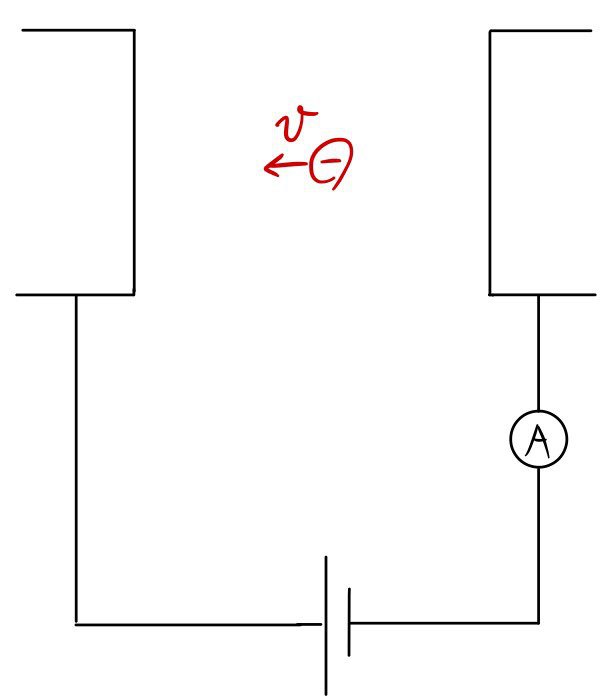
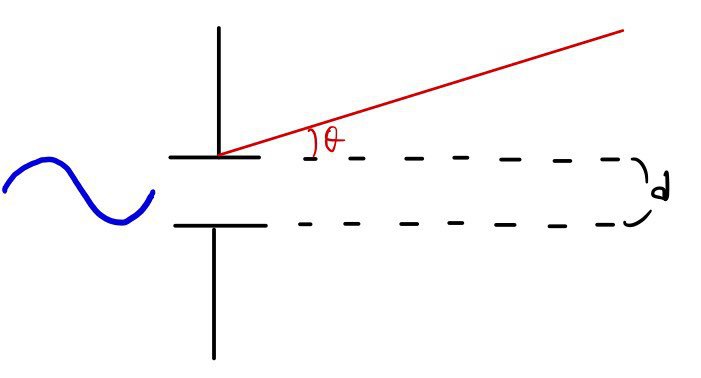
like this, you connect a power supply to two conductor plates,
and if you apply a strong!!! like seriously freaking strong!!!!! voltage,
then surely electrons will go ZOOM!!! flying from one plate and end up crashing into the opposite plate, right~~~~?
Right?!
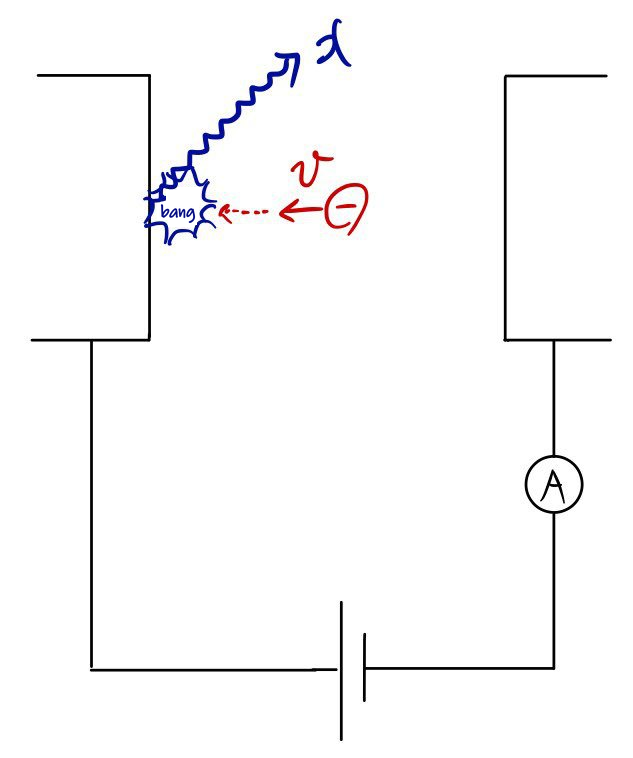
At that moment the electrons will go BANG!!! and smash in,
and people discovered that at that moment ‘some kind of unknown radiation’ is emitted,
but since they didn’t really know what it was,
they called it x
and called it x-ray, meaning the unknown x.
That’s the origin of x-rays!! hehehehehehe fascinating lolololol
Rather than just writing X,

you’ve got to write this kind of X lol, something like ‘unknown-variable style’, with that unknown-variable smell wafting right~~~ off it
Nowwww then, earlier we were looking at the energy of the electron that pops out due to light (particles), so the unit was on the order of a few eV, whereas
the unit of voltage here is on the order of a few keV!!!!!
So the unit of the maximum kinetic energy of that electron will also be around keV!!!!(the scale itself is different from the photoelectric effect!)
(What I mean is that there’s a big energy difference between the photoelectron that pops out due to the light shone on it and the electron that pops out due to the applied voltage.)
Alright, now since we’ve come from seeing the photoelectric effect, a pattern at this level has become a total piece of cake for us!~~
Now all we have to do is interpret this x-ray as a particle too?!?!??!!
If we call the largest of the energies of the ‘particle’ called x — not the unknown-x light that flies out from the electron over there —

we could write it like this.
Then this quantity will be

equal to something like this???

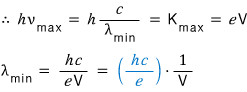
I colored the blue ones to emphasize that they are ‘constants’, and if you calculate all~~ those constants,
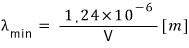
these guys that are emitted like this will be waves — well, waves at least, right???
If they’re waves, surely!!!!! they’ll undergo ‘diffraction’,
but the thing about diffraction is that


diffraction is what gets approximated like this!!!!!!
But the wavelength of x-rays is already on the scale of ten to the minus ninth power,,,,
oh my……..
That is, you’d have to drill a hole of ten to the minus ninth and pass it through,,,,
but there’s no way for humans to drill a hole that’s ten to the minus ninth meters? T.T T.T T.T
Then how can we check the diffraction of those X-rays……………!!!!!
It turns out there is a way to check it!!!!!!!
By using a ‘crystal’!!!!!!!
After finding out that the spacing between atoms is similar to that scale of ten to the minus ninth that we need,
people went ’let’s put this to use!’ is how it went, apparently.
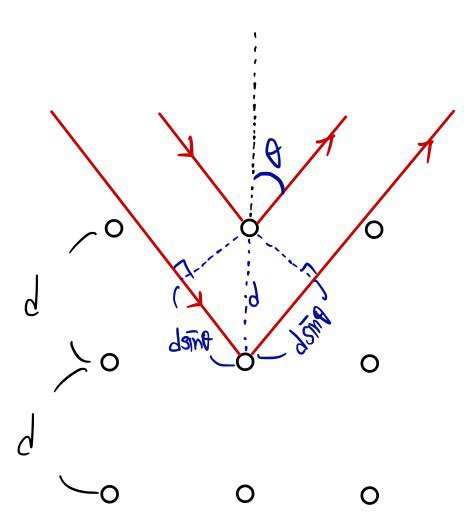
The path difference is 2dsinθ
Then: depending on the angle theta, when it becomes an integer multiple of the wavelength
&
when it becomes an odd multiple of the half-wavelength
according to those, constructive interference or destructive interference will occur, right???
=> When they checked, apparently it does.
Then this result also gives us yet another result.
It can become a device that can also figure out the d between atom and atom!!!!
With a known d → find λ
With a known λ → find d,
like this! hehehehehe
<Up to here is the diffraction of X-rays, and it ended with nothing particularly special….. there’s not much content…T.T hehehehe>
Comments
Discussion happens via GitHub Discussions. You'll need a GitHub account to comment.